How to Read Gummy Labels: MG Per Piece, Per Bag, and Serving Sizes

Ship to
How to Read Gummy Labels starts with one simple rule: never trust the front of the bag more than the numbers on the back.
Gummy labels love to play three-card monte with dosage: mg per piece, mg per serving, and mg per bag. Add in “servings per container” (which is often hilarious), and suddenly you need a calculator just to eat candy like an adult.
Let’s fix that. You’re going to learn the exact mg math, how serving sizes actually work, what to do with “per bag” totals, and which label red flags should make you put the product back on the shelf like it’s cursed.
Also, you’ll learn the only timing rule that matters: onset is not instant. Repeat it. Onset is not instant.
Most gummies with cannabinoids (THC, CBD, delta-8, CBN, etc.) present dosage in one or more of these ways:
Your job is to translate whatever they give you into the number you actually need: “How many milligrams are in the exact amount I’m about to eat?” That’s it. That’s the whole game.
Before you do any math, confirm what the mg is measuring.
A label might say:
Those are not the same thing, and the third one can be dangerously vague.
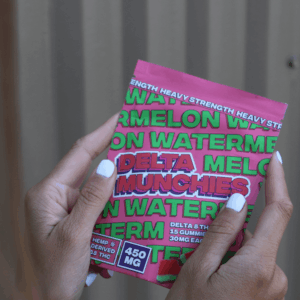
If a bag says “500 mg” but doesn’t say 500 mg of what, it could mean:
Do not assume it’s all THC. Do not assume it’s all CBD. Make the label tell you what’s inside.
If the label is unclear, your next stop should be the COA (Certificate of Analysis), which should list exact amounts per gummy and confirm what’s actually in the product. If the brand provides it, use it. If they don’t, that’s a problem. (More on red flags later.)
You don’t need advanced math. You need consistent math.
If the label says mg per gummy, congratulations. You’re done.
Example:
This is the cleanest labeling format. Life is good.
If the label says mg per serving, you must also find:
Then use: MG per piece = (MG per serving) ÷ (pieces per serving)
Example:
Now you can dose precisely instead of guessing.
If the label says total mg per bag, find:
Then use: MG per piece = (Total MG per bag) ÷ (Total number of gummies)
Example:
If it doesn’t say how many gummies are inside, you can’t verify dose without opening it and counting. That’s not “fun mystery candy.” That’s bad labeling.
Even when a label gives mg per gummy, people still get into trouble because they ignore two things:
So read the whole line:
The details matter. The vibes do not.
Serving sizes on gummies are often written like this:
Brands do this for two reasons:
You don’t have to follow their serving suggestion. You just have to do the math.
It’s important to remember that dosing isn’t a one-size-fits-all scenario, especially when it comes to how to dose THC drinks. Each individual’s tolerance and body chemistry can greatly influence their experience with different cannabinoids. For instance, while some may find comfort in higher doses of CBD, others might prefer a more balanced approach with both THC and CBD.
Moreover, understanding the effects of different cannabinoids can be crucial. For instance, research has shown that the effects and pharmacokinetics of cannabinoids like THC can vary significantly based on dosage and individual factors. Therefore, always take these aspects into consideration when consuming cannabinoid-infused products.
MG per gummy = 30 ÷ 3 = 10 mg each
If you assumed 30 mg per gummy, you’d be taking triple what you intended. That’s not a minor error. That’s a couch-locked scheduling conflict.
That means:
The label is not lying, but it is being sneaky. It’s like saying a pizza slice is a “serving” and then cutting the pizza into two slices.
“1000 mg per bag” is the classic billboard number. It’s big. It’s bold. It’s also meaningless unless you know what you’re eating.
Scenario A:
Scenario B:
Both are “1000 mg per bag.” One is manageable for many people. The other can body-check a beginner.
This is why “per bag” must never be the only dosing number you rely on.
If you eat:
So instead of obsessing over “servings,” do this:
Yes, you may have to cut a gummy. This is adulthood. It’s mostly cutting things in half and pretending it’s fine.
Some gummies combine cannabinoids, like:
When you see a combo, do not lump it into “total mg.”
A gummy with 5 mg THC + 25 mg CBD is not a 30 mg THC gummy. It’s a 5 mg THC gummy with 25 mg CBD alongside it.
Treat each cannabinoid like its own line item:
Example:
Label: “Each gummy contains 5 mg THC and 25 mg CBD.”
You eat 2 gummies:
This matters because CBD can change the feel of THC for some people, and because your tolerance to each compound can be different.
Gummies are edibles. Edibles take time. Time is the whole deal.
A few notes that save people:
Wait before you re-dose. Wait before you re-dose.
A common mistake is taking more at the 30 or 45 minute mark because “I don’t feel anything.” Then it all arrives at once like a surprise party you did not RSVP to.
Practical timing suggestion: If you are inexperienced or trying a new product, wait at least 2 hours before taking more. Yes, two. Be patient. Your future self will send you a thank-you note.
Some gummies are responsibly labeled. Some are… vibes-based. Avoid vibes-based dosing.
Here are the biggest red flags to watch for.
If it says “300 mg per bag” but not THC/CBD/etc., you don’t know what you’re getting.
If you can’t compute mg per piece from the label, the label failed.
“Hemp extract” can mean many things. If they’re hiding behind that phrase instead of listing exact cannabinoids, be skeptical.
A legit product should provide a current, third-party COA that matches:
If the COA is missing, outdated, or generic, don’t play detective with your liver.
Check the [Gummies + COA page](Gummies + COA page) if the brand offers it. Use it.
If a gummy promises to “cure anxiety,” “treat pain instantly,” or “fix your sleep forever,” you’re reading marketing, not science. Reliable brands stick to compliant, realistic language.
If the label says:
Let’s run common label scenarios.
If you eat 3 gummies:
If you want 10 mg:
Brands sometimes hide the mg per piece, but the container math gives it away.
This is not medical advice. It’s dosing common sense.
If you’re new to THC edibles, a lot of people choose to start low. Low means low.
Common beginner approaches:
If you don’t know your tolerance, don’t start with the hero dose. Nobody is impressed. Everyone is sweaty.
If the product is CBD-only, the approach is different because CBD is typically non-intoxicating, but you still want to verify the label and COA to confirm what’s actually in there.
Again, check the [Gummies + COA page](Gummies + COA page) for verified dosing details when available.
Some gummies claim:
These products may kick in faster for some people, but you still need the same basics:
Even “fast-acting” is not instant. If a product says you’ll feel it in 10 minutes, treat that as “maybe” not “guaranteed.”
Still wait before re-dosing.
Do this every time, especially with a new brand or a new bag.
Repeat: calculate first, chew second.
It means the milligrams of the listed cannabinoid(s) in the amount the brand defines as one serving. You must also check how many gummies are in a serving to calculate mg per piece.
To determine the mg per gummy, divide the total mg per bag by the total number of gummies in the bag. If the bag doesn’t specify how many gummies are inside, you can’t reliably calculate dose from the label alone. For more precise dosage calculations, consider using an edible dosage calculator.
Mg per piece provides the dose per gummy, which is essential for accurate dosing. On the other hand, Mg per bag indicates the total cannabinoids in the entire package, which is only useful after dividing by the number of pieces.
Not necessarily. It could be CBD, delta-8, “total cannabinoids,” or even a vague “hemp extract.” Always look for the specific cannabinoid listed, and verify using a COA when possible. Use the [Gummies + COA page](Gummies + COA page) if it’s provided.
Typically, gummies take 30 to 120 minutes to start working, with peak effects commonly occurring 2 to 4 hours after ingestion. The total duration of effects is often 4 to 8+ hours. It’s important not to re-dose early just because you “don’t feel it yet.”
Watch out for vague “mg” with no specific cannabinoid mentioned, missing pieces-per-bag information, absence of COA, a COA that doesn’t match the product, unrealistic claims, and dosage numbers that don’t add up.
It means the brand is defining half a gummy as one serving. If the label says “5 mg per serving” and the serving is half a gummy, then one full gummy is 10 mg.
Treat each cannabinoid separately. If one gummy has 5 mg THC and 25 mg CBD, then eating two gummies gives you 10 mg THC and 50 mg CBD. Don’t combine them into one “total mg” number for dosing THC.
Treat them as “possibly faster,” not “instant.” You still need mg clarity and a COA, and you still need to wait before re-dosing.

Jun 22, 2026 Jenna Renz

Jun 22, 2026 Jenna Renz

Jun 22, 2026 Jenna Renz