Hemp-Derived Delta-9 Gummies vs. Dispensary Edibles: Are They Actually the Same?

Ship to
Hemp-derived Delta-9 gummies vs.
But before you toss your skepticism into the trash (or add three packs to cart), here’s the real story: the differences aren’t molecular. They’re about sourcing, legal framework, dosing rules, formulation choices, testing, and how you buy them.
Let’s settle it, clearly, so you can buy like an adult and not like a panicked raccoon at a gas station.
Yes. Hemp-derived Delta-9 THC and marijuana-derived Delta-9 THC are molecularly identical. If you isolated Delta-9 THC from a hemp plant and compared it to Delta-9 THC from a marijuana plant, you would not be able to tell them apart by structure alone.
Delta-9 is Delta-9.
And because the molecule is the same, it interacts with your body the same way.
Delta-9 THC primarily interacts with CB1 receptors (mostly in the brain and nervous system) and CB2 receptors (more associated with immune function). Translation: it can influence mood, perception, appetite, sleep, discomfort, and that classic “I should text my ex… or maybe not” moment.
So if your question is, “Is hemp Delta-9 real THC?”
Yes. It’s not “diet THC.” It’s not “kinda THC.” It’s THC.
Because most of what you experience is not just “Delta-9 or not.” It’s:
Hemp products often lean into blends to create a more balanced experience, while dispensary edibles sometimes go heavier on straight THC potency. Not always, but often.
In U.S. law, the distinction is mainly THC concentration by dry weight in the plant.
Same genus. Same plant family. Same cannabinoids possible. Different legal bucket.
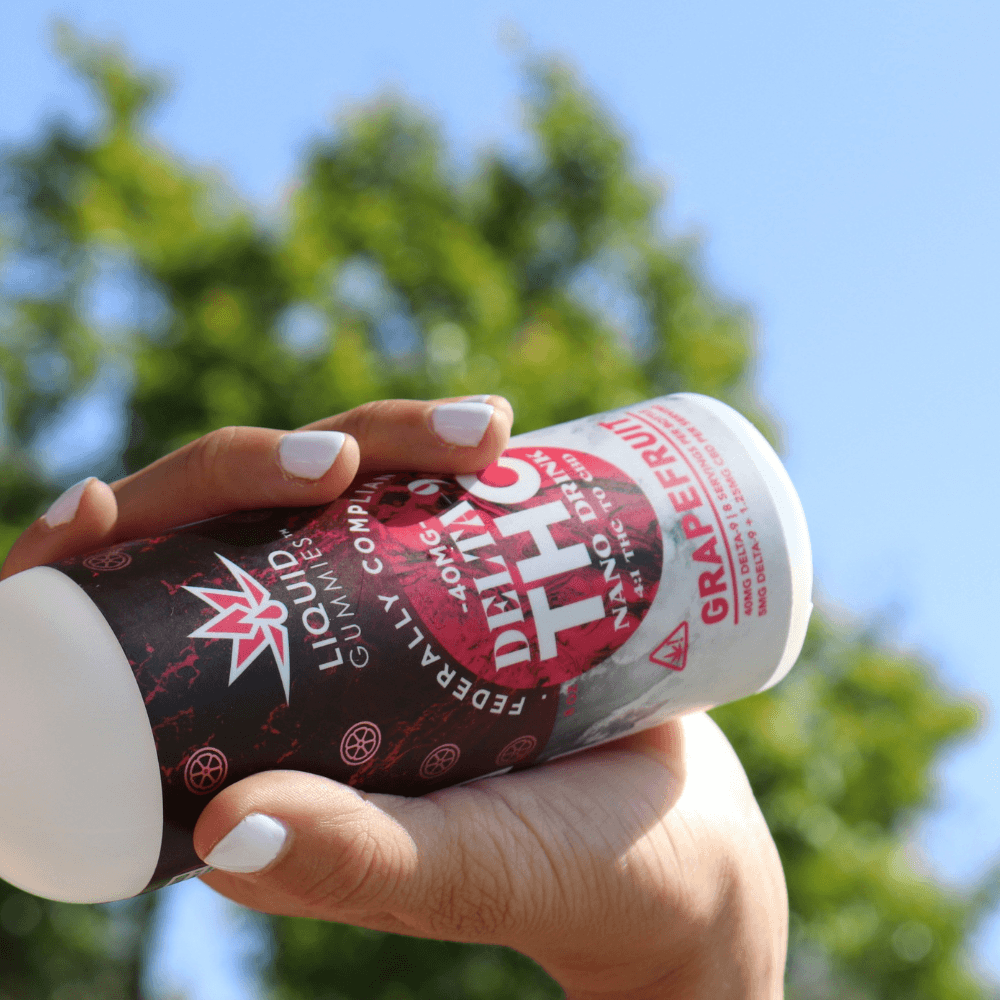
Here’s how hemp-derived Delta-9 gummies compare to dispensary edibles in a way that actually matters before you click “Buy Now.” Both products contain the exact same Delta-9 THC molecule, so the core psychoactive compound is identical. The difference starts with where they come from and how they’re regulated. Hemp-derived Delta-9 is extracted from federally legal hemp and sold through a hemp supply chain, while dispensary edibles are made from cannabis and sold through state-licensed programs.
That sourcing difference shapes everything else. Hemp-derived products are often available online and can be shipped in many states where laws allow it, while dispensary edibles are only sold in person at licensed shops. Formulations also tend to differ—hemp-derived gummies are frequently blended with cannabinoids like CBD, CBN, or CBG for a smoother experience, while dispensary edibles are often THC-forward, though blends do exist there too.
Potency varies on both sides. Hemp-derived gummies usually lean toward moderate, compliance-conscious dosing, while dispensaries often carry higher-potency options. Age verification is required either way if you’re buying from a reputable source, and lab testing standards also apply to both—though COA transparency and consistency can vary more widely in the hemp space depending on the brand.
Product consistency isn’t automatically better on either side; strong brands exist in both categories, and weaker ones exist in both as well. And when it comes to drug testing, there’s no real difference between them. The risk is the same.
Yes, hemp-derived Delta-9 gummies can absolutely get you high, assuming the product contains a meaningful amount of Delta-9 THC and you take a sufficient dose.
If someone tells you hemp Delta-9 is “non-psychoactive,” they’re either confused, selling something else, or auditioning for the role of Internet Misinformation #4,382.
Hemp-derived Delta-9 products exist because the hemp market expanded after federal hemp legalization (the 2018 Farm Bill), and brands began producing compliant products using hemp-derived cannabinoids.
The key point: “Hemp-derived” is about legal sourcing and the supply chain, not about a different kind of THC molecule.
But you still need to care about your state laws, because states can restrict or ban certain hemp-derived intoxicating products even if they meet a federal definition.
Action step: Before you buy, check whether your state allows shipment and sale of hemp-derived Delta-9 THC edibles. Do not assume. Do not rely on vibes.
Many hemp-derived Delta-9 gummies are formulated to stay within compliance and mainstream tolerance levels.
That often means:
Dispensary edibles, depending on the state, may offer much higher potency per piece and larger total package limits.
If you’re comparing a 5 mg hemp gummy to a 50 mg dispensary edible, that’s not a “hemp vs dispensary” issue. That’s a “you picked different planets” issue.
A lot of hemp-derived brands build gummies like a well-balanced cocktail, not a straight shot.
Common blend logic:
Dispensary edibles can be straight THC, or they can be complex too. The difference is that hemp brands often lead with blends because their customers include:
This is the practical difference you feel immediately.
If you live in a non-legal state and you want an edible experience without a road trip and a playlist called “Risky Decisions,” hemp-derived Delta-9 is the obvious point of comparison.
Here’s the blunt truth: both markets have great products and both markets have garbage.
So don’t shop by category. Shop by proof.
Buy like a skeptic. Demand:
If a brand can’t show you lab results, treat it like mystery meat. Hard pass.
Yes. Both produce the same THC metabolites, including THC-COOH, which is what most drug tests look for.
Let’s make this painfully clear:
If you get tested for work, probation, athletics, military, or anything else where a positive result can ruin your week, your month, or your entire life plan, do not play games.
Imperative sentence time:
If you can’t afford a positive test, do not consume Delta-9 THC, regardless of source.
This confusion comes from a few places:
Stay calm. Read labels. Verify COAs. Repeat: verify COAs.
Edibles are a different beast than smoking or vaping.
Typically 30 minutes to 2 hours. Sometimes longer. Yes, that’s annoying. No, taking more at minute 37 is not “being efficient.”
Instruction: Take your dose. Wait at least 2 hours before increasing.
Often 4 to 8 hours, sometimes more depending on dose and individual factors.
When THC is metabolized through digestion, it converts into 11-hydroxy-THC, which can feel more potent for many people. That can happen with hemp-derived Delta-9 edibles and dispensary edibles alike.
Same route, same chemistry, same potential for “I am one with the couch.”
Use this simple decision framework.
But don't romanticize either channel. Great brands win. Weak brands lose. Act accordingly.
Whether it's hemp-derived or dispensary, do this every time:
And yes, you can still get surprised. That's edibles. But you can dramatically reduce the odds of a bad time.
If you're buying in the hemp space, you need to keep one eye on compliance because rules can change and enforcement can tighten. There is a Nov 12, 2026 federal deadline that may affect how certain hemp-derived products are regulated, defined, or sold.
Instruction: Don't guess. Stay current.
Link your customers to your explainer: "what's changing" (your compliance update page) and keep it updated as guidance evolves.
Repeat after me: Stay compliant. Stay in business.
Not inherently. Milligrams are milligrams. What changes is typical product design, serving size, and whether the formula includes CBD/CBN/CBG.
It can be extracted from hemp, or produced via conversion from other cannabinoids depending on the process and the product. The only smart move is to read the COA and brand disclosures. If a company is vague, walk away.
Yes. Same metabolites. Same risk.
Talk to a clinician if you’re using THC routinely for sleep, stress, or discomfort, especially if you take other medications. Daily use can also build tolerance. Also, if you need to be sharp tomorrow morning, don’t treat dosing like a competitive sport.
For many people: start with 2.5 to 5 mg Delta-9 THC, wait 2 hours, then adjust. If the product includes additional cannabinoids, take that into account. If you are new, go lower. Being cautious is not lame. Being uncomfortably high is lame.
Hemp-derived Delta-9 gummies vs. dispensary edibles are the same in the way that matters most: the Delta-9 THC molecule is identical and the effects can be identical at the same dose.
The real differences live in:
So stop asking, “Is it real?”
Start asking, “Is it tested, dosed correctly, and legal where I live?”
That’s how you buy with confidence. That’s how you avoid regret. And that’s how you keep checkout from turning into a late-night science experiment.
Yes. Hemp-derived Delta-9 THC and marijuana-derived Delta-9 THC are molecularly identical. The Delta-9 molecule is the same regardless of whether it's extracted from hemp or marijuana, meaning it interacts with your body in the same way through the endocannabinoid system.
The differences in experience aren't due to the Delta-9 molecule itself but factors like dose, presence of other cannabinoids (CBD, CBN, CBG), terpenes and flavorings, edible base (gummy vs chocolate), absorption rates, and individual factors like tolerance and metabolism. Hemp products often blend cannabinoids for a balanced effect, while dispensary edibles may focus on higher straight THC potency.
The legal distinction between hemp and marijuana is based on THC concentration by dry weight. Hemp contains 0.3% or less Delta-9 THC by dry weight, while marijuana contains more than 0.3%. Both belong to the same cannabis genus and family but fall under different legal categories.
Yes, hemp-derived Delta-9 gummies can absolutely get you high if they contain a meaningful amount of Delta-9 THC and you consume a sufficient dose. They are not non-psychoactive; the intensity depends on dosage, presence of other cannabinoids like CBD or CBN, your tolerance, metabolism, and whether you've eaten recently.
Hemp-derived Delta-9 gummies are commonly available online and can be shipped depending on state laws, often sold under federal hemp regulations. Dispensary edibles are typically purchased in-person at licensed dispensaries within states that regulate cannabis programs.
Lab testing for hemp Delta-9 products varies widely by brand; buyers should vet certificates of analysis (COAs) carefully. Dispensary edibles require lab testing under state rules but quality can still vary. Product consistency can be excellent with strong hemp brands but may be sketchy with weaker ones; dispensaries often offer consistent products but not always superior quality automatically.

Jun 22, 2026 Jenna Renz

Jun 22, 2026 Jenna Renz

Jun 22, 2026 Jenna Renz