Fast-Acting Hemp Drinks: How Nano-Emulsion Technology Changes Everything

Ship to
Fast-acting hemp drinks are flipping the script on “wait two hours and hope for the best,” thanks to nano-emulsion technology that makes hemp-derived THC behave more like a beverage and less like a slick of oil floating on top.
If you’ve tried traditional edibles, you know the routine: eat gummy, stare at the clock, feel nothing, eat another gummy (a classic mistake), then get launched into space during a completely unrelated Zoom call. Hemp drinks built with nano-emulsified cannabinoids aim to fix that whole mess by delivering a faster, more predictable onset, often in the 5 to 30 minute range instead of the usual edible roulette.
This article is the hemp-specific companion to a broader THC drinks conversation, with one big focus: how nano-emulsion makes hemp-derived THC water-soluble, faster-acting, and easier to dose. We’ll also cover what to look for on labels, how hemp drinks differ from dispensary drinks, and a very important regulatory reality check heading toward late 2026.
Cannabinoids like THC are hydrophobic, meaning they don’t dissolve in water. They dissolve in fats and oils. That’s why classic edibles are typically made with infused butter, distillate in oil, or fat-friendly formulations.
Now look at the average beverage. It’s mostly water. When you dump oil-based THC into water, three things happen:
This is the bioavailability problem in plain English: your body can’t use what it can’t absorb efficiently. And oil-heavy cannabinoids in a watery drink are not exactly set up for success.
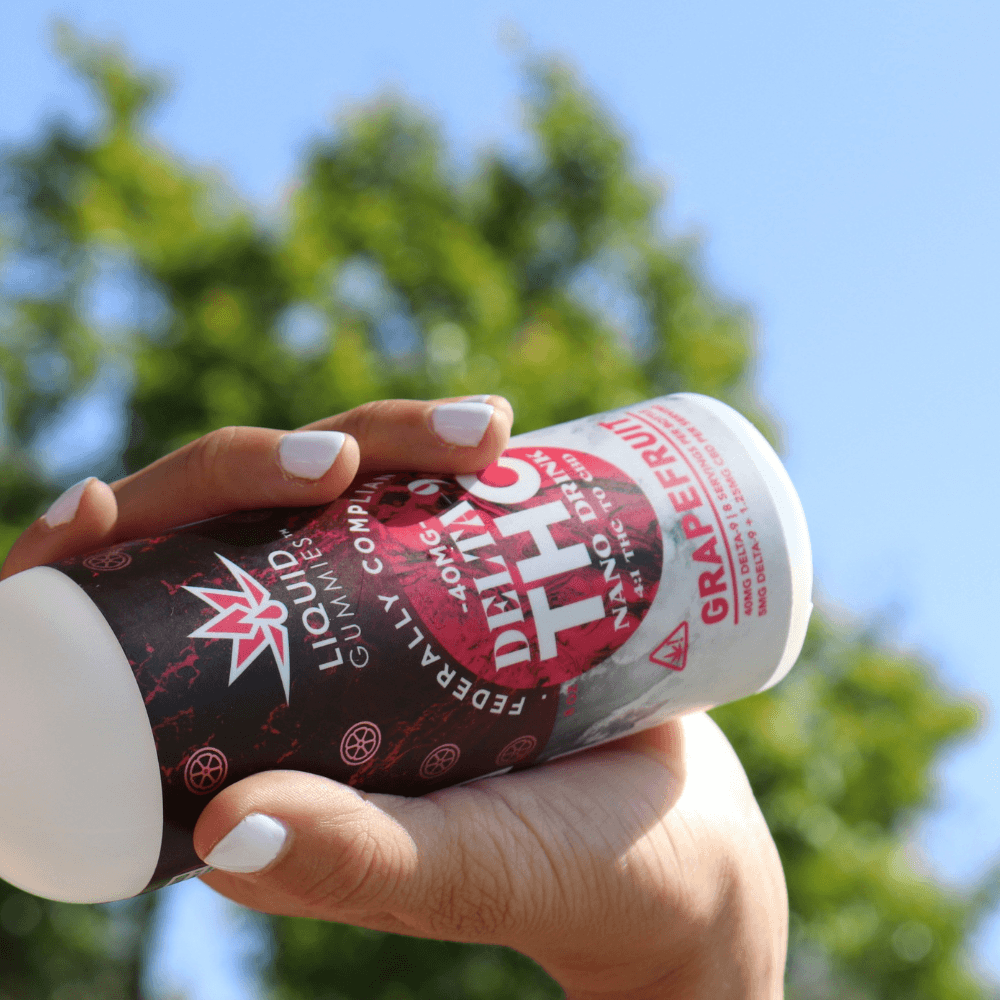
A nano-emulsion is a method of dispersing oil-based compounds (like cannabinoids) into water as extremely small droplets, often in the nanometer range. Think of it like taking a big glob of oil and breaking it into a cloud of tiny, evenly distributed droplets that can stay suspended in a beverage.
It’s not “water-soluble THC” in the way sugar is water-soluble. It’s more accurate to say:
To create that stable mix, manufacturers typically use:
The goal is simple: a consistent beverage, consistent dosing, and faster uptake.
Here’s the practical magic of nano-emulsion: surface area.
When oil droplets get smaller, their total surface area increases massively. More surface area gives your body more opportunity to interact with and absorb the cannabinoids.
That can translate to:
Important nuance: onset and intensity still vary based on your body, what you’ve eaten, the product’s actual formulation quality, and how accurately it’s dosed. Nano-emulsion is not a teleportation device. It’s just a better delivery system.
Traditional edibles usually take the scenic route:
Hemp drinks using nano-emulsified THC often aim for a different experience:
Do not interpret this as “weaker.” Interpret it as more beverage-like: quicker to arrive, easier to pace.
Plenty of brands will slap “fast-acting” on a can because it looks great next to “natural flavors” and “good vibes only.” Your job is to verify whether the product is actually built for speed.
Nano-emulsion is one of the most common technologies used to support fast onset in hemp beverages, but quality matters. Poorly made emulsions can still:
So yes, nano-emulsion can change everything. But only if it’s done correctly.
If you want a hemp drink that’s actually fast, actually dosed right, and actually compliant, read the label like a detective with caffeine.
Look for:
If the label only shows “hemp extract” with no mg breakdown, treat it like a mystery novel. Fun, but not something you should ingest for predictable results.
Also check for other cannabinoids that affect the experience:
Marketing claims are cheap. Milligrams are real.
If a product claims:
That’s a clue, not proof. Pair it with the next item.
A reputable hemp beverage should offer a Certificate of Analysis (COA) from an independent lab. Ideally, you can scan a QR code and see:
If the COA is missing, outdated, or unrelated to the batch, pass. You’re buying a drink, not joining a trust fall exercise.
Hemp beverages may use various forms of THC depending on what’s legal where they’re sold, including hemp-derived cannabinoids. Labels and COAs should clarify what’s inside.
If the product is vague about what form of THC it uses, that’s not “proprietary.” That’s just unhelpful.
You may see emulsifiers or stabilizers such as lecithin or other food-grade emulsifying agents. Not every label will shout “nano-emulsion,” but you can often spot that the formulation is designed to keep cannabinoids evenly dispersed.
If you pour it into a glass and see obvious oil slicking, separation, or ring residue, that is not a great sign for uniform dosing.
Dispensary THC drinks are generally sold under state-regulated cannabis programs. Hemp-derived THC drinks often exist in a different lane, historically tied to hemp rules and farm-bill-style definitions.
That difference can affect:
Here’s the practical takeaway: don’t assume a hemp drink and a dispensary drink are interchangeable, even if both say “10 mg THC” on the front. The sourcing, compliance framework, and consumer protections may not be the same.
Now the part nobody can ignore.
As of November 2025 legislation, hemp-derived THC beverages face significant restrictions by late 2026, including a limit of ≤ 0.4 mg total THC per container in many contexts.
That number is not a typo. It’s tiny.
What this means for you:
Also: if you travel, do not assume your drink can come with you. Airports and local jurisdictions have their own opinions, and they are not shy about them.
Fast onset changes how you dose. That’s the whole point. So act like it.
If you drink one, feel nothing at minute 8, and drink another, you’re not “microdosing.” You’re scheduling a surprise.
Food can change absorption. Sometimes it smooths the ride. Sometimes it slows onset. If you want the most predictable experience, be consistent with your routine.
Nano-emulsion can improve consistency, but it doesn’t guarantee:
Your sleep, stress, hydration, and last meal all get a vote.
Avoid hemp drinks that have:
Buy from brands that act like adults. You’re ingesting this. Standards matter.
Hemp-derived THC beverages have had to win on two fronts:
Nano-emulsion helps solve the engineering problem, which improves the consumer experience. That’s why it’s so central to the fast-acting hemp drink conversation.
It’s not hype. It’s chemistry, tightened up and dressed for a night out.
Before you add to cart:
If you want to browse options built for fast onset and clear dosing, head to our hemp beverages category and choose something that matches your tolerance, your timeline, and your desire to stay on planet Earth.
Shop smart. Sip smarter. And remember: fast-acting means fast decisions, too.
Fast-acting hemp drinks use nano-emulsion technology to make hemp-derived THC water-compatible, enabling faster onset times typically within 5 to 30 minutes. Unlike traditional edibles that rely on digestion and liver metabolism causing delayed and variable effects, these drinks provide a quicker, more predictable experience similar to beverages rather than oil-based edibles.
Nano-emulsion breaks down oil-based cannabinoids into tiny droplets suspended evenly in water, overcoming the natural hydrophobic nature of THC. This increases surface area for absorption, resulting in faster onset, improved bioavailability, consistent dosing, and stable beverage formulations without separation or uneven distribution.
Cannabinoids like THC are oil-soluble and do not dissolve in water, which causes them to separate in water-based products. In traditional edibles made with infused butter or oils, this leads to slow digestion-based absorption, inconsistent dosing due to settling or clinging to packaging, and unpredictable onset times often exceeding two hours.
Consumers should verify if the product uses nano-emulsion technology or other advanced emulsification methods that promote faster onset. Labels indicating the use of emulsifiers, stabilizers, and processes like ultrasonication or homogenization suggest quality formulation. Beware of products simply labeled 'fast-acting' without evidence of proper nano-emulsification as they may separate or dose unevenly.
Hemp drinks primarily contain hemp-derived cannabinoids formulated with nano-emulsion for rapid onset and predictable effects. Dispensary THC beverages may have different formulations relying on oil-based distillates with slower absorption and longer-lasting effects due to first-pass metabolism producing metabolites like 11-hydroxy-THC. Hemp drinks aim for a cleaner, beverage-like experience with easier pacing.
While specifics vary by jurisdiction, there is an important regulatory reality check approaching late 2026 concerning hemp-derived THC beverages. Consumers and manufacturers should stay informed about evolving laws impacting formulation standards, labeling requirements, and permissible cannabinoid levels to ensure compliance and product safety in this emerging market.

Apr 30, 2026 Jenna Renz

Apr 30, 2026 Jenna Renz

Apr 30, 2026 Jenna Renz