Hemp-Derived THC: What’s Legal to Ship Nationwide in 2025

Ship to
Is Hemp Derived THC legal to ship nationwide in 2025? Well, only when it fits inside a tight federal box, clears state law, and survives carrier rules without getting your package punted into the sun.
Let’s make this simple, clear, and annoyingly honest.
If you sell or buy hemp-derived cannabinoids, you’re not really asking, “Is this legal?” You’re asking:
This guide covers all of that, including THCa flower, “conversion” confusion, shipping policies, and what could change in the 2025 to 2026 Farm Bill cycle.
The internet loves a clean headline. The law loves chaos.
Here’s the practical truth in 2025:
So when someone says “legal to ship nationwide,” what they usually mean is:
“It can be shipped across state lines when it meets federal hemp rules and the destination allows it and the carrier accepts it.”
Yes, it’s a three-lock system. No, you don’t get to pick the easiest lock.
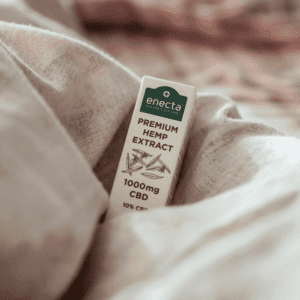
The 2018 Farm Bill (Agriculture Improvement Act of 2018) federally defines hemp as:
That last line is the famous one:
≤ 0.3% delta-9 THC by dry weight is the federal threshold.
It means: hemp that meets the definition is not marijuana under the federal Controlled Substances Act.
It does not automatically mean:
You need compliance that is correct, documented, and easy to explain.
Dry weight is why gummies can contain milligrams of THC yet still be “0.3% delta-9 THC by dry weight.”
Example:
If a gummy weighs 5 grams (5,000 mg), then 0.3% of that is 15 mg.
So a 5g gummy could theoretically contain up to 15 mg delta-9 THC and still be under 0.3% by dry weight.
That’s why delta-9 hemp gummies exist.
Flower is different because it’s lighter and the percentages get tight fast. And that leads us to the internet’s favorite argument.
THCa flower is one of the most misunderstood products in hemp. It is also one of the most litigated in the court of public opinion, which is not a real court but it sure is loud.
That conversion is real. It is also the entire point of the product.
Most hemp compliance tests for the Farm Bill definition focus on delta-9 THC concentration, not “how much THC you’ll get after heating.”
So THCa flower can show:
This is why you’ll see people say:
In 2025, the reality is: it depends on the jurisdiction and the enforcement posture.
Many regulators and state programs care about total THC, which often means:
total THC ≈ delta-9 THC + (THCa × 0.877)
That 0.877 factor accounts for molecular weight changes during decarboxylation.
Even if a product’s delta-9 is under 0.3%, a high THCa number can make the total THC exceed 0.3%.
Some state hemp programs and state laws already use total THC for hemp classification. Federal law under the 2018 Farm Bill uses the delta-9 definition, but federal agencies and future legislation can move the goalposts.
If you sell THCa flower in 2025, you must be transparent: it may be federally defensible, but it’s not universally welcomed.
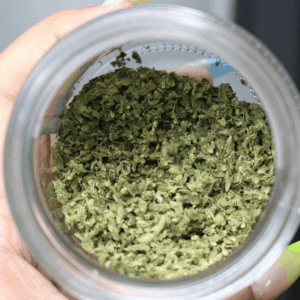
Here’s the practical landscape.
These tend to create fewer problems with carrier screening and law enforcement suspicion, though nothing is guaranteed.
Don’t ship vibes. Ship paperwork.
If you want to ship hemp-derived THC products across state lines with a straight face, do these things.
You need a recent COA (Certificate of Analysis) from an accredited lab that clearly shows:
For flower, you also want clarity on:
If your label says 10 mg and your COA suggests something else, that mismatch is where trouble starts.
For businesses, have a digital and printable packet that includes:
Some sellers include a copy in the shipment. Some keep it ready upon request. The best approach depends on your risk tolerance and the carrier.
Words matter.
Avoid:
You’re not just selling a product. You’re building evidence. Don’t create evidence that hurts you.
You asked for a green/yellow/red compliance map, but no charts. So here’s the same concept, in words:
State laws change constantly. Agencies issue guidance. Legislatures pass bills. Courts block bills. Then un-block them. It’s a hobby at this point.
So treat the following as a starting point, not a substitute for legal counsel. If you’re a buyer, check your state. If you’re a business, check both states: origin and destination.
Instead of pretending nothing changes, here’s what is consistently true in 2025:
A responsible hemp company does not ship everything everywhere just because it wants to. It ships based on:
So the map concept becomes a policy:
Green: ship. Yellow: ship selectively. Red: do not ship.
If you want, I can convert this into a destination-state shipping policy page structure you can paste into WordPress later.
Even if something is legal, a carrier can refuse it. Carriers are private businesses. They love money. They love less liability more.
USPS allows shipping of hemp under federal law when:
Translation: USPS is often the most workable option for hemp commerce, if you have documentation and you’re not shipping into a state where the product is prohibited.
What to do:
UPS policies generally allow hemp-derived products under certain conditions, but they are typically stricter on:
UPS is often used by established brands with consistent compliance systems. If your operation is “me and a label printer,” expect friction.
What to do:
FedEx has historically been more restrictive and policy-sensitive about cannabis-adjacent shipments. In practice, many hemp brands either avoid FedEx or use it only with clear policy alignment and strong documentation.
What to do:
If you are shipping hemp-derived THC products, you are also managing:
Pick the carrier that matches your documentation discipline. If your paperwork is messy, your shipping will be messy. The universe is consistent like that.
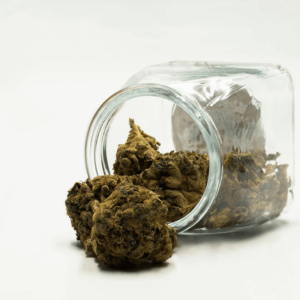
A serious compliance setup in 2025 looks like this:
You’re not just shipping cannabinoids. You’re shipping credibility.
If HyperWolf Hemp wants differentiation and trust, here’s what to be explicit about and what customers should see.
Do this:
Repeat after me: make the COA easy. Make the COA easy.
Do this:
Do this:
Do this:
You can be cheeky. Just don’t be reckless.
Farm Bill cycles are where “loopholes” go to get either clarified or closed.
In 2025 and heading into 2026, there’s ongoing political and regulatory pressure around intoxicating hemp products. One of the biggest potential changes that could impact shipping legality is:
If federal law changes to total THC, THCa flower becomes much harder to defend under the hemp definition.
So do this now:
Use this quick checklist.
You’re not being paranoid. You’re being realistic.
Do these, in this order:
Annoying? Yes. Necessary? Also yes.
So, what’s legal to ship nationwide in 2025?
That’s the deal. No magic. No loophole fairy.
Hemp-derived products are generally federally legal if they meet the 2018 Farm Bill definition of hemp: no more than 0.3% delta-9 THC by dry weight, and they comply with other applicable laws (including FDA and state rules where relevant).
No. It refers to delta-9 THC concentration by dry weight, not overall intoxicating potential. Some products (including certain edibles and THCa flower) can be intoxicating while still meeting the delta-9 threshold.
Sometimes. Many delta-9 hemp gummies are formulated to stay under 0.3% delta-9 THC by dry weight, which can make them federally compliant. But state laws may restrict or ban them, and some states impose serving/package limits.
No. Delta-8 legality is highly state-dependent, and many states restrict or ban it. Even where allowed, enforcement and regulatory interpretations vary.
It depends. THCa flower can be federally arguable as hemp if delta-9 THC is ≤ 0.3% by dry weight on the COA. However, many states regulate hemp using total THC concepts or restrict hemp flower, which can make shipping into those states illegal or risky.
Because when heated, THCa converts into delta-9 THC, producing intoxicating effects similar to high-THC cannabis. The legal debate is about how hemp is defined and tested, not about whether the chemistry works.
Total THC is commonly calculated as delta-9 THC + (THCa × 0.877). Some states and regulators use total THC to determine whether something qualifies as hemp. If federal law shifts toward total THC, many THCa products could become non-compliant.
USPS generally allows hemp shipments if they meet the federal hemp definition and the shipper retains documentation proving compliance, and if the shipment complies with federal, state, and local laws.
It depends on your business setup and the product category. Policies vary and can be stricter than USPS in practice. The safest move is to align your shipping process with the carrier’s published rules and keep documentation ready.
At minimum, you should be able to produce:
Often, no. Many companies restrict shipping by state and by product category due to changing laws, enforcement posture, and carrier constraints.
It might. There is ongoing momentum to tighten definitions around intoxicating hemp products, potentially by using total THC or restricting specific cannabinoids. Expect changes, and don’t assume 2018 rules will remain untouched forever.
No. This article is for informational purposes only and laws change fast. For decisions involving risk, compliance, or enforcement exposure, consult a qualified attorney familiar with hemp regulation in the relevant jurisdictions.

Jun 22, 2026 Jenna Renz

Jun 22, 2026 Jenna Renz

Jun 22, 2026 Jenna Renz