Why the HHC vs Delta 9 Conversation Matters

Ship to
In the ever-expanding world of cannabis and hemp innovation, two compounds have grabbed a lot of attention: Hexahydrocannabinol (HHC) and Delta‑9 Tetrahydrocannabinol (Delta 9 THC).
We’ll look at how Delta 9 has long been the industry standard—thanks to its role in the cannabis plants universe and its powerful psychoactive effects—and how HHC is emerging as a milder alternative that’s derived differently, positioned in the hemp derived products market, and packaged with unique properties. We’ll dig into chemical makeup, how they interact with the body’s endocannabinoid system, therapeutic benefits (and risks), legality, and real-world product availability. By the end you’ll be able to make an informed decision whether HHC or Delta 9 is the better fit for you.
Let’s start with HHC. HHC is a synthetic cannabinoid (more precisely a semi-synthetic) that has gained popularity recently. While it occurs naturally in trace amounts in the hemp plant (a variety of the cannabis plant), most commercial HHC is created via a hydrogenation process — taking naturally derived cannabinoids, adding hydrogen atoms, and yielding a slightly altered molecule.
Unlike typical natural cannabinoids like Delta 9, HHC’s origin is more chemically handled, meaning it’s not just pulled straight from the plant in high amounts.
Users of HHC products (vapes, edibles, hhc gummies) often say that the high is more “balanced” or “clear-headed” compared to traditional THC. The appeal: similar to classic THC effects but with what feels like lighter intensity. HHC has been marketed in the hemp market as part of the growth of hemp derived cannabinoids, appealing to those who may find Delta 9’s potent psychoactive effects a bit much.
Now for Delta 9: It’s often referred to simply as “THC” in the recreational cannabis world. Delta 9 THC is the main psychoactive compound in the cannabis plant — those same thousands of years of usage for recreation, medicine, culture. It’s what most people mean when they talk about “getting high.”
With Delta 9, you get a classic mix of euphoria, altered sensory perception, mood alteration, appetite stimulation, and sometimes high sedation or mental fog at higher doses. These are the potent psychoactive effects that have driven interest in cannabis products for decades, including pain relief, appetite stimulation, and stress management applications. When someone compares HHC vs Delta 9, they’re really comparing the “traditional THC high” vs something a little gentler.
Understanding manufacturing helps clarify differences. For Delta 9, it is often directly extracted from cannabis sativa or cannabis indica plants (the “marijuana” side of things) as a naturally occurring cannabinoid. The cannabis plant produces Delta 9 in moderate to high amounts, depending on strain and growth conditions.
HHC, by contrast, is produced through a process called hydrogenation, where hydrogen molecules are added to THC or other precursors (often hemp-derived) so that double bonds are removed and hydrogen atoms added.
Because of that, HHC may appear more stable (against oxidation) and isn’t naturally abundant in plants in usable amounts. It becomes part of the hemp derived cannabinoids family because many products start with hemp derived CBD or other hemp-based extracts and convert them to HHC.
The distinction: Delta 9 is largely plant-extracted; HHC is plant-derived at the first step (via hemp or cannabis plant) but then chemically altered. This influences how brands label them, how the molecules behave, and how regulators treat them.
When comparing “HHC vs Delta 9,” you’ll often see talk of chemical structure or molecular structure. Here’s a breakdown:
Because of that, HHC’s molecular stability can differ (it may resist degradation better) and its binding affinity with cannabinoid receptors (CB1, CB2) may be slightly different. These seemingly small structural tweaks result in key differences in how the brain, nervous system and body respond to each.
Let’s talk about how you feel when you use each. Despite structural differences, HHC and Delta 9 share psychoactive properties by interacting with the endocannabinoid system (particularly the CB1 receptor in the brain and nervous system). Both can deliver euphoria, relaxation, mood shift, creativity or sedation—depending on dose, individual body chemistry, method of use, and setting.
Here’s a rough comparison:
Delta 9 THC
HHC
So if you compare “HHC vs Delta 9” from a feel perspective: Delta 9 is more likely to push you into deeper altered states; HHC offers a smoother ride with many of the same hallmarks but fewer extreme peaks.
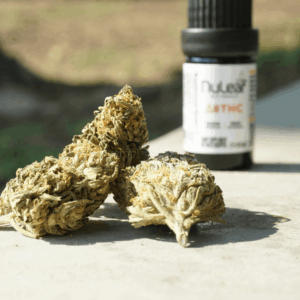
One of the biggest questions: “Which is stronger?” When you’re looking at HHC vs Delta 9 in terms of potency, the consensus is fairly clear: Delta 9 THC tends to be more potent. For example: HHC is often estimated at around 70–80% of the potency of Delta 9.
That means if you take equal milligram for milligram, Delta 9 may hit harder. But remember: dose, delivery method (gummies vs vapes vs flower), your body weight, metabolism, and tolerance all affect how “hard” it hits. Brands of hhc products may also blend other cannabinoids or terpenes, which can further alter the experience.
In summary: If you’re after full-throttle effects, Delta 9 remains the heavyweight champion; if you prefer something a little gentler, HHC may be your go-to.
Beyond recreation, many users are drawn to cannabinoids for potential therapeutic benefits. Delta 9 THC has been more widely studied and has demonstrated uses for pain relief, appetite stimulation, nausea reduction, and even sleep or stress management in clinical and anecdotal settings.
HHC, being newer and less researched, has a leaner data set. Anecdotal reports suggest it may offer mood elevation, relaxation, muscle ease, and mild pain relief—but we should emphasize that HHC’s research is still in early days. For those exploring other cannabinoids, the appeal is real.
If I break it down:
In either case, always approach with mindfulness and verify you’re using hemp derived products (when appropriate) and following applicable local laws.
When comparing HHC vs Delta 9, we can’t skip safety. Both are psychoactive substances, meaning they affect the mind and body in significant ways—and with that comes risk.
With Delta 9:
With HHC:
Key safety tips for both:
One of the trickiest parts in HHC vs Delta 9 is the question of legality. Let’s break it down carefully.
Under federal law (in the U.S.), Delta 9 THC in high concentrations is a Schedule I controlled substance—meaning federally illegal in many contexts. However, the 2018 Farm Bill (and subsequent interpretations) permits hemp (defined as cannabis plants with less than 0.3% Delta 9 THC by dry weight) and their derivatives under certain circumstances.
Some hemp derived Delta 9 THC products claim compliance by staying under certain thresholds. But that doesn’t automatically make them legal in all states.
Because HHC is often marketed as hemp derived, many products claim to be federally legal under the agriculture improvement act (i.e., the Farm Bill). The logic: if you start with hemp, convert CBD (or other precursors) into HHC via hydrogenation, you’re offering a product derived from hemp. However:
Another practical concern when comparing HHC vs Delta 9: Drug tests. If you’re subject to workplace screening or important life obligations, this section matters.
Recommendations:
Availability is a practical dimension in HHC vs Delta 9. The market speaks loud.
If you’re shopping:
After all that detail: how do you decide which path—HHC vs Delta 9—is right for you? It depends on your goals, experience level, tolerance, and risk comfort. Consider the following:
By aligning your choice with your experience, goals, and tolerance, you can navigate HHC vs Delta 9 in a smart way.
What lies ahead in the ongoing evolution of cannabinoids? As research grows, we expect both HHC and Delta 9 to change in status, availability, and perception.
In short: the cannabis plants world is moving fast, adoption of hemp derived cannabinoids is accelerating, and the distinction between HHC vs Delta 9 will become more nuanced as we learn more.

When you weigh HHC vs Delta 9, you’re comparing two cannabinoids that share many similarities (they both engage your body’s endocannabinoid system, produce psychoactive effects, and can be derived from hemp/cannabis plants) yet differ in potency, source, chemical structure, and legal status. Delta 9 remains the classic, potent, tried-and-true cannabinoid with established effects, therapeutic value, and regulatory history. HHC offers a milder alternative, emerging in the hemp derived products space, appealing to those seeking something less intense but still effective.
Your choice comes down to your tolerance, desired effect, experience level, and legal environment. Remember that regardless of which you pick, safety and informed consumption matter. Always check product sourcing, manufacturing quality, lab testing, and your local laws. Used well, both HHC and Delta 9 hold potential for relaxation, mood support, creativity, stress relief, and more.
Happy exploring. May your choice—whether HHC or Delta 9—align with your goals, keep you safe, and help you find the experience you’re looking for.

Jun 22, 2026 Jenna Renz

Jun 22, 2026 Jenna Renz

Jun 22, 2026 Jenna Renz