
 Rewards



What is CBG (Cannabigerol)? It is a non-psychoactive cannabinoid often called the “mother cannabinoid” because it starts the biochemical domino chain that leads to CBD, THC, and several other cannabinoids in the hemp plant.
If you’re here because CBD feels a little too “meh,” or because you want something more functional than “relax and melt into the couch,” CBG is worth your attention. It’s early days for the science, but the direction is interesting: focus and alertness support, anti-inflammatory potential, neuroprotective signals, appetite stimulation, and even antibacterial activity.
Let’s break it down clearly, without the mysticism and without the marketing fog.
What exactly is CBG?
CBG stands for cannabigerol. It’s one of many cannabinoids produced by Cannabis sativa (including hemp). Unlike THC, CBG is not intoxicating, meaning it won’t produce a “high.”
CBG is usually found in very small amounts in mature hemp flower. That’s a big reason it stayed obscure for so long. The plant tends to convert CBG into other cannabinoids as it develops, so by harvest time, most of the original CBG is gone.
And that brings us to the “mother cannabinoid” nickname.
Why CBG is called the “mother cannabinoid”
CBG gets labeled the mother cannabinoid because of CBGA, or cannabigerolic acid.
CBGA is the chemical precursor that the plant uses to create:
- THCA (which becomes THC after heat)
- CBDA (which becomes CBD after heat)
- CBCA (which becomes CBC after heat)
- And others, depending on genetics and enzymes
Think of CBGA as the raw material and the plant’s enzymes as the factory equipment. Once CBGA gets converted downstream, there’s less of it left to become CBG.
So when people say CBG is the “mother,” they’re pointing to this biological reality: CBGA sits upstream of the major cannabinoids.
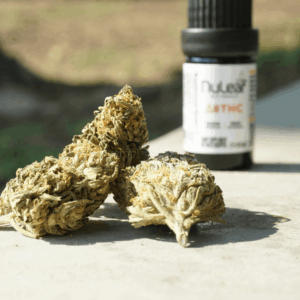
CBG vs CBD: Same family, different personalities
CBG and CBD both come from hemp, both are non-psychoactive, and both interact with the body’s endocannabinoid system (ECS). But they are not interchangeable.
The short version
- CBD is best known for calm, stress support, and “taking the edge off.”
- CBG is commonly associated (anecdotally and in early research directions) with clarity, daytime functionality, and a more “awake” feel.
The slightly nerdier version: how they interact
Cannabinoids can influence the ECS by interacting with receptors (like CB1 and CB2) and other signaling systems.
- CBD has a complex profile and does not strongly bind to CB1/CB2 like THC does. It influences multiple pathways, including receptor modulation and enzyme activity.
- CBG appears to interact differently and, in preclinical research, shows activity across multiple receptor systems, which may relate to its functional effects.
Translation: CBD tends to be the chill one. CBG tends to be the “let’s do the dishes” one.
That’s an oversimplification, but it’s a useful starting point.
Does CBG get you high?
No. CBG is non-intoxicating. It does not produce the classic impairment associated with high-THC cannabis.
That said, here’s the practical detail people miss: a product can be “CBG” and still contain small amounts of THC if it’s full-spectrum. If you want to avoid THC entirely, choose:
- Broad-spectrum CBG (THC removed, other cannabinoids retained), or
- CBG isolate (just CBG)
Also remember: “won’t get you high” and “won’t show up on a drug test” are not the same promise. We’ll cover that later.
What does CBG feel like?
People commonly describe CBG as:
- More clear-headed
- More daytime-friendly
- Less “heavy” than CBD
- Sometimes energizing or focusing
If CBD feels like a weighted blanket, CBG can feel more like opening a window and letting fresh air in.
But keep your expectations adult-sized: effects vary by dose, product type, body chemistry, and whether the formula includes other cannabinoids or terpenes.
Potential benefits of CBG (what the early research suggests)
Important: human research on CBG is still emerging. Many findings come from preclinical studies (cell and animal models). That’s not useless, but it’s not the same as large human clinical trials.
With that honesty in place, here are the most-discussed areas where CBG is showing potential.
1) Focus and alertness support (the “CBG vs caffeine” conversation)
CBG has become popular in wellness circles as a daytime cannabinoid. Many users report it supports:
- Focus
- Motivation
- Mental clarity
- A smoother sense of alertness than coffee
Is CBG a caffeine replacement? Not chemically. Not literally. But functionally, many people use it in the same moment of the day: morning and early afternoon, when they want to be on, not out.
If you’re caffeine-sensitive, CBG may be appealing because it’s often described as alert without jitters. Just don’t treat that as a medical claim. Treat it as a reason to experiment carefully, with realistic expectations.
2) Anti-inflammatory potential
Inflammation is involved in a long list of modern discomforts, from sore joints to post-workout recovery to general “why do I feel 87 years old today?”
CBG is being explored for anti-inflammatory activity in preclinical research. The mechanism is not a single on/off switch. It likely involves multiple pathways, including interactions with receptors related to immune signaling.
Practical takeaway: people often try CBG for daytime body comfort when they want relief but do not want sedation.
3) Neuroprotective potential
CBG is also being studied for neuroprotective properties, meaning it may help protect nerve cells under certain conditions (again, in early-stage research).
This is one of the reasons CBG has attracted attention beyond the mainstream CBD crowd. The research interest is there, but we need more high-quality human data before anyone should make hard promises.
4) Appetite stimulation
CBG has been linked in preclinical research to appetite stimulation.
If that makes you think of THC and the munchies, fair. But the key difference is that CBG is not intoxicating. The appetite angle is one reason some people experiment with CBG when they want to support:
- Appetite during stress
- Appetite during intense training blocks
- General “I forget to eat” lifestyles (yes, that’s a thing)
If appetite control is your goal, be mindful here. CBG may not be the best match for you.
5) Antibacterial activity
One of the most interesting research directions for CBG is antibacterial potential in lab settings, including activity against certain resistant bacteria in preclinical work.
Before anyone turns that into a superhero cape, remember: lab results are not the same as approved treatments. Still, it’s a real area of scientific interest and a reason CBG stands out from the usual cannabinoid chatter.

Where does CBG come from in hemp?
CBG in finished products typically comes from hemp that is:
- Bred to produce higher CBG (special cultivars harvested earlier), or
- Processed to isolate or concentrate CBG
Because most hemp converts CBG into other cannabinoids as it matures, high-CBG flower is less common and can be more expensive.
So if you see a CBG product that’s unusually cheap, don’t clap yet. Check the lab report, check the source, and check whether you’re actually buying meaningful CBG or just a label with ambition.
Types of CBG products (and how to pick one)
You can find CBG in several formats. Your best choice depends on speed, convenience, and how precise you want your dosing to be.
CBG oil tinctures
- Best for: flexible dosing, daily routines
- Pros: easy to titrate dose up or down
- Cons: taste varies, effects can take longer than inhalation
CBG gummies and capsules
- Best for: convenience, consistent dosing
- Pros: pre-measured, travel-friendly
- Cons: slower onset, harder to fine-tune
CBG topicals
- Best for: localized use (muscles, joints, targeted areas)
- Pros: no “whole-body” effect for many users
- Cons: product quality varies wildly
CBG flower orvape products
- Best for: faster onset
- Pros: effects felt sooner
- Cons: not ideal for everyone, and vaping brings its own considerations
If you’re wellness-focused and want non-intoxicating, daytime-friendly support, many people start with CBG oil or CBG gummies.
Full-spectrum vs broad-spectrum vs isolate (choose like a grown-up)
This matters because it affects experience, THC exposure, and even how confidently you can travel or test.
Full-spectrum CBG
Contains CBG plus other cannabinoids and trace THC (within legal limits).
- Pros: “entourage effect” potential
- Cons: may contain detectable THC; not ideal for drug testing
Broad-spectrum CBG
Contains multiple cannabinoids but with THC removed (or reduced to non-detect in many products).
- Pros: broader cannabinoid profile without THC
- Cons: quality depends heavily on processing and testing
CBG isolate
Pure CBG with no other cannabinoids.
- Pros: simplest, precise, THC-free (if verified)
- Cons: may feel less “rounded” for some users
If you’re highly THC-avoidant, choose broad-spectrum or isolate and confirm with a third-party lab report.
How to read a CBG lab report (COA) without pretending to be a chemist
Every reputable hemp brand should provide a Certificate of Analysis (COA) from a third-party lab. Do not skip this. Not once. Not ever.
Here’s what to look for:
- Cannabinoid potency
- Verify the product actually contains the listed amount of CBG.
- Check for THC content, especially if you want broad-spectrum or isolate.
- Contaminant testing
- Heavy metals
- Pesticides
- Microbials
- Residual solvents (especially for concentrates)
- Date and batch match
- COAs should be recent and correspond to the exact batch you’re buying.
No COA? No purchase. Be loyal to your health, not to a label.
Dosing CBG: start low, repeat, adjust
There is no universal “correct” CBG dose. People respond differently. Product formats absorb differently. Your endocannabinoid system is also not a photocopy of your friend’s.
Use a simple approach:
- Start low (especially if you’re new to cannabinoids)
- Hold for a few days at the same dose
- Increase gradually until you find your “sweet spot”
If you’re specifically trying CBG for focus, take it earlier in the day first. You can experiment later with timing once you know how it affects you.
Also, pay attention to combinations:
- CBG + CBD is a common pairing for “calm focus.”
- CBG + THC (even trace) may feel different than CBG alone.
Is CBG legal? (and can it ship nationwide?)
In the United States, hemp-derived CBG is federally legal when it is produced from hemp that contains no more than 0.3% delta-9 THC on a dry weight basis, consistent with the 2018 Farm Bill framework.
That’s the federal view.
Real life includes state rules, carrier policies, and product-specific interpretations. So do this:
- Buy from brands that provide clear compliance messaging
- Check your state and local laws
- Make sure the product includes third-party testing and proper labeling
If a brand can’t explain legality without getting weirdly vague, pick a different brand.
Will CBG make you fail a drug test?
CBG itself is not what most standard drug tests look for.
Drug tests typically screen for THC metabolites, not CBG.
However, you can still run into risk if:
- Your product is full-spectrum (trace THC is present)
- THC content is higher than expected due to poor quality control
- You take high doses over time
- The product is mislabeled (sadly, this happens)
If drug testing is a serious concern for you, choose CBG isolate or broad-spectrum with non-detectable THC on the COA. Even then, no brand can honestly guarantee a pass. Biology has a sense of humor, and it is not the fun kind.
Who might want to try CBG?
CBG is often a good fit for people who want cannabinoid support without impairment, especially for daytime use. It may appeal if you are looking for:
- A clearer, more functional alternative to “sleepy cannabinoids”
- A non-intoxicating wellness option
- Support for daytime comfort and recovery routines
- Something that feels more “get it done” than “melt into bed”
Who should be cautious?
Use extra caution and talk to a qualified clinician if you are:
- Pregnant or breastfeeding
- Taking prescription medications (possible interactions exist with cannabinoids)
- Managing a medical condition where self-experimentation is risky
- Sensitive to supplements, stimulants, or changes in appetite
Also: if you try CBG and feel wired or uncomfortable, reduce the dose or stop. Wellness should not feel like a wrestling match.
How to shop for CBG products (without getting scammed)
Do these five things:
- Demand a COA for the exact product batch.
- Confirm THC levels align with your needs.
- Check ingredient quality (carrier oils, flavoring, additives).
- Choose transparent brands that explain sourcing and extraction.
- Avoid miracle claims because real science does not need fairy dust.
If a product promises to cure, treat, or fix everything from your attention span to your taxes, back away slowly.
Final takeaway: CBG is “mother cannabinoid” energy, without the high
CBG sits at the start of the cannabinoid family tree, and it’s carving out a modern role as a non-psychoactive, daytime-friendly cannabinoid with serious potential. Keep it simple: buy tested products, start low, stay consistent, and judge it by your real-world results, not hype.
If you want functional wellness without impairment, CBG might be your new favorite letter in the cannabinoid alphabet.
FAQ: What is CBG (Cannabigerol)
Is CBG the same as CBD?
No. They are different cannabinoids with different effects and different interaction profiles in the body. CBD is typically associated with calm and stress support, while CBG is commonly used for more daytime, clear-headed routines.
Why is CBG called the mother cannabinoid?
Because CBGA is the precursor compound the plant uses to create THCA, CBDA, and other cannabinoid acids. CBG is closely tied to that upstream role in cannabinoid synthesis.
Is CBG psychoactive?
CBG is non-psychoactive and does not cause intoxication like THC.
Can I take CBG every day?
Many people do, but daily use should be based on your goals and how you respond. Start low, track how you feel, and use third-party tested products.
What’s better for anxiety, CBG or CBD?
Many people prefer CBD for anxiety-style calm. Some people like CBG + CBD for “calm focus.” Your response may vary, so start with low doses and adjust slowly.
Does CBG help with focus?
Users often report improved focus and alertness, and early research interest supports exploring CBG for functional wellness. It is not proven as a treatment for attention disorders, and it should not be positioned as a replacement for medical care.
How long does CBG take to kick in?
It depends on the format:
- Oils: often 30 to 90 minutes (varies widely)
- Gummies/capsules: often 60 to 120 minutes
- Inhaled formats: often within minutes
Is full-spectrum CBG stronger than isolate?
Sometimes, because the mix of cannabinoids and terpenes may change the overall effect profile. But “stronger” depends on your goal, tolerance, and the actual milligrams per serving.
Is CBG safe?
CBG appears generally well tolerated in typical consumer use, but research is still developing. Use reputable products, avoid extreme dosing, and consult a clinician if you take medications or have health conditions.
Is hemp-derived CBG legal to ship nationwide?
Federally, hemp-derived cannabinoids are generally legal if the product meets the 0.3% delta-9 THC limit and follows applicable rules. State laws vary, so verify local regulations and buy from compliant brands with clear lab reports.
Will CBG show up on a drug test?
CBG is not the target of standard drug screens, but products may contain THC (especially full-spectrum). If drug testing matters, use broad-spectrum or isolate with non-detectable THC on the COA, and understand there is still some risk.
Can I combine CBG with caffeine?
Many people do. If you’re sensitive to stimulation, start with low doses of both. The combo can feel great or feel like you accidentally double-booked your nervous system.
