How to Buy THCa Flower Online Legally: A First-Timer’s Vetting Guide

Ship to
How to buy THCa flower online legally starts with one boring truth that will save you a lot of money and a lot of drama: most “legal” claims online are marketing, not compliance.
THCa flower is everywhere right now because it hits that sweet spot of curiosity, convenience, and “wait, is this actually allowed?” energy. And because the search volume is massive, the internet is packed with brands and affiliate sites that look legit until you notice they say a whole lot of nothing.
So let’s fix that.
This guide is written from a consumer protection angle. Not a hype angle. Not a “trust us, bro” angle. You’ll get four non-negotiable checkpoints to verify before you buy, plus red flags to run from, plus a simple buying flow you can follow even if you’ve never purchased hemp online in your life.
Important note: laws change, and enforcement varies by state and local jurisdiction. Read this as a practical vetting checklist, not legal advice. If your state has special rules, follow them. Do not argue with your mailbox.
THCa is tetrahydrocannabinolic acid, the naturally occurring form of THC found in raw cannabis and hemp flower. On its own, THCa is not the same molecule as delta-9 THC.
Heat changes the game.
When THCa is heated (smoked, vaped, or cooked), it can convert into delta-9 THC through decarboxylation. That’s why THCa flower may feel similar to traditional high-THC flower when used the same way.
So how can it be sold as “hemp”?
Under federal hemp rules from the 2018 Farm Bill framework, “hemp” is cannabis with delta-9 THC at or below 0.3% on a dry weight basis. Many THCa flower products are marketed as federally legal hemp because their delta-9 THC result is under 0.3% at the time of testing.
That’s the core claim.
Here’s the catch: some sellers rely on confusion between delta-9 THC and “total THC” concepts used in some states. A product can show delta-9 ≤ 0.3% but still be treated as illegal in certain jurisdictions if regulators use total THC calculations or have state-specific restrictions on THCa-rich flower.
Your job as a buyer is not to debate chemistry on Reddit. Your job is to verify compliance, verify documentation, and buy from sellers who behave like they expect to be audited.
That’s what the four checkpoints are for.

If a seller passes all four, you’re shopping like a grown-up. If they dodge even one, you’re gambling.
COA means Certificate of Analysis. It’s the lab report. It should tell you what’s in the flower and, just as importantly, what’s not.
A real COA should include:
Now for the part most people miss: the COA must match the exact product and batch you are adding to cart.
If you’re looking at “Sour Space Unicorn 28g,” and the COA is for a different strain, different size, or a generic “hemp flower,” that’s not transparency. That’s a screenshot in a lab coat.
Do this right now while shopping:
You’re not being picky. You’re being safe.
Extra-credit move: Google the lab name. Real labs have a real footprint. If the “lab” looks like it exists exclusively inside that one brand’s website, treat it like a fictional character.
If you only remember one number, remember this: 0.3% delta-9 THC.
The COA should clearly list delta-9 THC as a percentage by dry weight. If the seller makes you work to find it, or hides behind “Farm Bill compliant” without showing delta-9 results, that is not a compliance-minded company.
What you want to see:
What you do not want to see:
Also, watch out for old lab reports. A COA from a year ago doesn’t tell you what’s in the flower being shipped today.
Set a standard: if it’s not reasonably recent and batch-matched, it’s not good enough.
You are buying an agricultural product that sits in a regulated gray zone and gets shipped through the same logistics system that delivers shoes and cat litter.
You want a seller who can prove where it came from.
Look for:
Then verify it.
A reputable seller will usually provide:
If the site feels like it appeared yesterday, offers zero sourcing info, and leans heavily on memes and discounts, you’re not shopping. You’re playing compliance roulette.
For instance, a licensed farm should have clear documentation about their operations and compliance with state regulations.
Simple rule: if they cannot tell you where it was grown, they do not deserve your money.
Batch verification is the difference between “we test” and “we test this.”
It’s also where shady sellers get lazy, because most first-time buyers do not check.
You want a seller that:
If a brand has one COA PDF for an entire catalog, that’s not a lab program. That’s a prop.
Do this before checkout:
This is basic consumer protection. Treat it that way. Understanding these principles can also help in recognizing deceptive practices such as greenwashing, which is often seen in product marketing. For more insights on how to apply consumer protection basics to greenwashing cases, it’s essential to remain vigilant and informed.
You do not need a forensic lab. You need standards.
If you have to email for a COA, you’re already in the danger zone.
A compliant seller posts it publicly because they expect scrutiny.
If delta-9 is missing, unclear, or buried, walk away.
Generic COAs are a classic trick. If you can’t match batch/lot numbers, assume it doesn’t match.
Real labs are independent. You should be able to find them outside the seller’s ecosystem.
If a site claims THCa flower “treats anxiety,” “cures pain,” “stops cancer,” or anything that sounds like a pharmaceutical ad, back out immediately.
You want compliant hemp sellers, not internet doctors with shopping carts.
If it’s dramatically cheaper than the market with constant “90% off” behavior, assume corners are being cut somewhere: sourcing, testing, storage, or all three.
No address, no customer service contact, no company details, no policies, no nothing.
If you cannot tell who is selling it, you cannot hold anyone accountable.
If they ship everywhere with zero mention of restrictions or legal considerations, that is not confidence. That is carelessness.
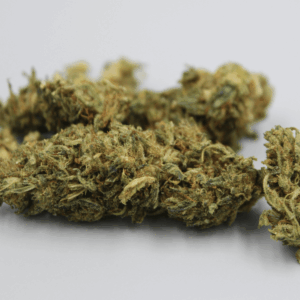
This is the simplest way to buy THCa flower online without getting lured into nonsense.
Do not skip this because you are excited.
Some states treat THCa-rich flower differently even when delta-9 is under 0.3%. Others have restrictions on smokable hemp. Some local jurisdictions are stricter than the state.
If you see a seller explicitly refusing to ship to certain states, that can be a good sign. It means they are tracking compliance instead of pretending rules don’t exist.
Start with brands that put COAs on product pages, show batch numbers, and explain sourcing. You are not looking for the loudest brand. You are looking for the most verifiable.
Do not fall in love with a strain name. Fall in love with documentation.
If any part fails, close the tab. Do not “maybe” your way into a bad purchase.
Good flower can be ruined by bad storage.
Look for:
If a site cannot write a simple product description without making it sound like a magical herb discovered by monks, it might also struggle with basic compliance tasks.
You are testing a supply chain. Act like it.
Buy a smaller quantity first. Check:
Once a seller proves consistency, then you scale up.
Lab reports can feel like they were designed by someone who hates joy. Focus on what matters.
You want to see:
Do not panic if you see a lot of cannabinoids listed. That’s normal. Just make sure delta-9 is clearly presented and compliant.
At minimum, look for:
Look for pass/fail indicators and limits. If contaminants are missing entirely, that’s a problem. If everything is marked “ND” (not detected) across the board, that can happen, but it should still be accompanied by a credible lab and a real report.
If the report looks like a template with blanks filled in, treat it like one.
Let’s clean up a few myths that sellers love because myths sell.
Reality: legality depends on how your state defines hemp compliance and how enforcement works locally. Federal framework is one layer. States and localities are another layer. You live in the layers.
Reality: companies ship questionable products every day. Shipping is not a legal opinion. It’s a logistics event.
Reality: “Farm Bill compliant” is a phrase, not proof. Proof is a batch-matched COA showing delta-9 THC ≤ 0.3% and a transparent supply chain.
Reality: COAs can be outdated, mismatched, incomplete, or for a different product. The COA has to match the batch you’re buying and include contaminants testing. For more information on how to properly read a Certificate of Analysis for hemp products, check out this helpful guide on reading a COA.
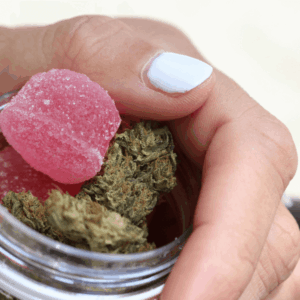
You are not just buying flower. You are buying the seller’s habits.
Look for these signals:
A transparent brand does not act offended when you ask for proof. They act prepared. Because they are.
First-time buyers often compare THCa percentages like it’s a video game stat. Higher must be better, right?
Not always.
THCa percentage is one variable. It does not automatically equal quality, safety, or a better experience.
Compare products like this:
Do not buy a product just because the THCa number is loud.
Buy because the documentation is solid.
Any site can say:
Words are cheap. PDFs are better. Batch-matched PDFs are best.
If a seller is truly compliant and transparent, they will happily show:
If they cannot, they are not ready for your money.
If you want to buy THCa flower online legally with the least risk, choose a hemp site that behaves like compliance is the product.
That means:
This is what separates a real operator from a pop-up shop with a logo.
And yes, it also usually means the product is more consistent. Not because compliance is glamorous, but because companies that can manage documentation tend to manage cultivation, storage, and fulfillment better too.
Competence is a package deal.
Use this before every first purchase from any new seller.
If you cannot check these boxes, do not “hope.” Shop elsewhere.
THCa flower is fun. Buying it should be boring.
Verify the COA. Verify delta-9 THC is ≤ 0.3%. Verify licensed sourcing. Verify the batch. Repeat, repeat, repeat.
Do that, and you will avoid most of the nonsense that clogs this market. You will also end up supporting the kind of hemp businesses that keep this category alive by doing things the right way, not the loud way.
Now go shop like you expect to be protected. Because you should.

Jun 22, 2026 Jenna Renz

Jun 22, 2026 Jenna Renz

Jun 22, 2026 Jenna Renz