Legal Mushroom Products Explained: What’s in Them and How to Read Labels

Ship to
Legal mushroom products explained are everywhere right now, and the labels are… let’s call them “creative.
This guide breaks down what’s actually in these products, what’s usually legal (by category), how to read labels like a professional skeptic, and how to spot red flags before you spend money or, worse, swallow mystery powder.
Big, boring, necessary disclaimer (read it anyway): This article is for general education, not medical or legal advice. Laws change, labeling can be misleading, and your health situation is unique. If you’re pregnant, nursing, on medications, or have a medical condition, talk to a licensed clinician. If you need legal guidance, talk to an attorney in your jurisdiction. Also, “natural” is not a safety certification.
When someone says “mushroom product,” they might mean three completely different things. Treat them differently.
These are common edible species used as foods or supplements, typically non-intoxicating. Examples you’ll see on labels:
Typical forms: powders, capsules, tinctures, coffees, gummies, “focus” blends.
Typical legality: commonly sold as dietary supplements in the U.S. and many other places, but they’re still regulated around labeling and disease claims. Supplements are not allowed to claim they diagnose, treat, cure, or prevent disease. The FDA has been clear about this general rule for supplements. FDA – Dietary supplements

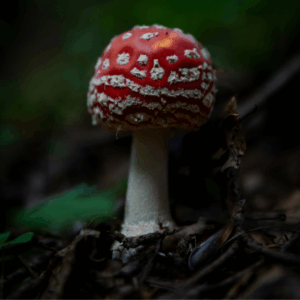
These products are usually based on Amanita muscaria or Amanita pantherina (or extracts thereof). The most talked-about compounds are:
Typical forms: gummies, tinctures, vapes (yes), chocolates, “microdose” products, “legal trip” products.
Typical legality: often sold in a gray zone depending on jurisdiction. Some places restrict Amanita species; some don’t. Retail availability does not equal legality everywhere. Also, legality does not equal safety.
Why this category needs extra caution: potency varies wildly, processing matters, and products sometimes fail to clearly disclose muscimol mg and whether ibotenic acid is present.
These are products containing, or claiming to contain, compounds from “magic mushrooms,” mainly:
Typical forms: chocolates, gummies, capsules, “mushroom bars,” “trip” edibles.
Typical legality: In the U.S., psilocybin and psilocin are Schedule I controlled substances at the federal level. DEA – Controlled substances schedules Some states and cities have decriminalized enforcement to varying degrees, and some jurisdictions have created regulated programs, but that does not automatically legalize retail products everywhere.
Important consumer reality: Many “psilocybin” edibles sold online do not contain psilocybin. Some have functional mushrooms. Some have research chemicals. Some have undisclosed intoxicants. Your label is not a truth serum.
Here’s what you’re most likely to find on labels, and what each term usually means.
Why it matters: Some products labeled “mycelium” are effectively myceliated grain powder. That can mean more starch and less mushroom-specific compounds per gram. Not always bad, but you should know what you’re paying for.
Better labels specify:
Extract ratio examples: 10:1, 8:1, 1:1.
If you see:
A label that brags “40% polysaccharides” without clarifying beta-glucans might be using a number that’s easy to inflate.
If a supplement lists a proprietary blend, you may not know how much of each mushroom you’re getting. That’s not automatically shady, but it does make it harder to assess dose, value, and tolerability.
If you’re trying a product for the first time, prefer fully disclosed per-ingredient amounts.
For Amanita products, look for specificity:
If the label only says “Amanita blend” with no compound amounts, treat it like a black box.
Some products loudly claim:
That might mean functional mushrooms only. Or it might mean Amanita. Or it might mean “we’re not saying what’s in it.”
Use that claim as a prompt to dig deeper, not as reassurance.
Let’s keep this simple and honest.
Generally legal to sell as supplements, assuming compliant manufacturing and labeling.
But: It’s illegal to market supplements with disease treatment claims. The FDA regularly enforces against unapproved drug claims. [FDA – Warning letters](https://www.fda.gov/inspections-compliance-enforcement-and-criminal-investigations/compliance-actions-and-activities/warning-letters)
Legal status varies by country, state, and sometimes municipality. Some places restrict Amanita species or certain preparations. Many places do not have clear rules, which creates a “sold openly” gray market.
Translation: You must check your local laws. Do not assume “legal online” means “legal for you.”
Often illegal under federal law in the U.S., with limited exceptions in regulated programs or specific local policy approaches. Decriminalization is not the same as legalized retail sale, and it’s definitely not the same as “safe product.”
If a website claims “100% legal psilocybin gummies shipped to all states,” that’s not a brave business model. That’s a red flag wearing a neon hat.
You don’t need a biochemistry degree. You need a checklist and a little suspicion.
Ask:
If the marketing says “trip,” “visions,” “psychedelic,” “shroom bar,” or “magic,” assume you’re not in functional-mushroom land anymore, even if the front label pretends otherwise.
A serious functional mushroom label often includes the Latin name, for example:
A serious Amanita label should specify:
No species listed? That’s like buying “fish.” Could be salmon. Could be a boot.
You want to see:
Do not get hypnotized by the front label.
Check:
Repeat this: per serving, per ingredient, per day. Per serving, per ingredient, per day.
A COA is lab testing documentation. Brands often link it via QR code or batch number.
Minimum you want on a COA:
For functional mushrooms, look for:
For Amanita/muscimol products, look for:
If there is no COA, or it’s a generic “sample COA” not tied to your batch, treat it as marketing, not evidence.
Common red flags:
A COA can be legit and still not tell the whole story. Use it properly.
If you scan a QR code and it dumps you into a blurry PDF with no batch match, that’s not transparency. That’s a scavenger hunt.
This is where we stay firmly in “consumer safety” territory. No miracle claims. Just practical caution.
Functional mushroom supplements are generally used daily, and effects (if any) are usually subtle and gradual. The most common issue is not “overdose.” It’s tolerability.
Common label issues:
Do this: Start with the lowest suggested serving for a week. Increase only if you tolerate it.
If a product contains muscimol, you want clear mg amounts. “One gummy = one journey” is not a dosage strategy. It’s a slogan.
Do this:
People love combining:
That is how “fun experiment” turns into “why is my heart doing that.”
If you take any medications or have mental health conditions, talk to a clinician before using intoxicating products. Also consider that supplements can have interactions, and labels may not warn you adequately. NCCIH – Using dietary supplements wisely
Even when the mushroom is fine, the rest of the formula can be the problem.
Watch for:
Also: “vegan” gummies sometimes use pectin (fine) but still contain other additives that impact tolerability.
If you remember nothing else, remember this: labels sell feelings. COAs sell facts. Demand the facts.
Yes, it’s less exciting. That’s the point.
You don’t need perfection. You need basic competence.
Choose products that:
Only consider products that:
Treat it as high risk. At best, it’s misleading marketing. At worst, it’s an unlabeled chemistry project.
Even legit products can vary.
Consistency is a safety feature. Demand it.
Legal mushroom products can be totally normal supplements or totally intoxicating compounds, and the label doesn’t always make that obvious. Read the species. Read the serving size. Read the COA. Ignore the hype.
Be boring. Be careful. Be the adult in the room.
Usually, no. Many “legal mushroom” gummies contain functional mushrooms, Amanita compounds (like muscimol), or other ingredients. Psilocybin is a controlled substance in many jurisdictions, including federally in the U.S. DEA scheduling
Look for a batch-specific COA that matches your product’s lot number and includes contaminant testing. A generic COA that doesn’t match your batch is not strong evidence.
It means the product is made from the mushroom itself (the above-ground part). This is often preferred over mycelium-on-grain powders when you’re trying to avoid extra starch from the growth substrate.
Not automatically. But “mycelium” products can include significant grain substrate depending on how they’re made. Prefer brands that clearly explain the material and provide meaningful testing data (like beta-glucans and contaminants).
Beta-glucans are a class of compounds commonly measured in functional mushroom products as a quality indicator. Be cautious with labels that only list “polysaccharides,” which can be less specific.
Not always, but it limits your ability to evaluate dose and value. If you’re sensitive, new to supplements, or comparing products, fully disclosed formulas are usually the safer bet.
Safety depends on dose, processing, individual factors, and product quality. Amanita products can be intoxicating, and potency can vary. Avoid mixing with alcohol or sedatives, and avoid driving after use. If you choose to use them, only consider products with clear muscimol labeling and batch COAs.
Yes, supplements can interact with medications and health conditions. Do not assume “natural” means “no interactions.” Use extra caution if you take prescription meds, especially anything affecting the nervous system, sleep, mood, blood pressure, or blood clotting. Consider guidance from a licensed clinician. NCCIH supplement guidance
Products promising a “psilocybin-like trip” while claiming they’re “legal everywhere,” with no transparent testing and no clear active compound disclosure. That’s how consumers end up with mystery ingredients.
Some people use them as part of wellness routines, but effects can be subtle and vary widely. Avoid products making disease treatment claims. Supplements are not approved as drugs for curing or treating diseases. FDA supplements overview
At minimum: species (ideally Latin name), part used, form (extract/powder), serving size, mg per ingredient, manufacturer info, batch/lot number, and access to a batch-specific COA with contaminant testing.

Jun 22, 2026 Jenna Renz

Jun 22, 2026 Jenna Renz

Jun 22, 2026 Jenna Renz